

Oh la la : Quelle année!
Le plus récent rapport de la rectrice est consacré à l’élan, qui a certainement été grand cette année. Certaines traditions veulent qu’autour des fêtes de fin d’année, les gens fassent une liste du bon et du moins bon. En réfléchissant à l’année écoulée, j’ai dressé la liste de toutes les excellentes choses que nous avons accomplies en 2023.
- Nous avons établi notre premier conseil d’administration et notre premier Sénat.
- Nous avons nommé notre première vice-rectrice aux études et installé notre première chancelière à notre première collation des grades.
- Nous avons obtenu l’agrément complet de notre programme de médecine pour huit ans du Comité d’agrément des facultés de médecine du Canada.
- Nous avons appris que l’expansion de nos programmes de médecine et de résidence serait supérieure à ce que nous avions pensé et conduirait à doubler les places dans nos programmes de médecine.
- Nous avons mobilisé environ 24,5 millions de dollars (depuis mai 2022), y compris des millions de la Temerty Foundation pour appuyer le travail du Centre Dr Gilles Arcand pour l’équité en santé de l’Université de l’EMNO.
- Nous avons examiné le Plan de financement alternatif de la Northern Ontario Academic Medicine Association.
- Nous avons signé la Déclaration des institutions universitaires en santé sur la santé planétaire dévoilée lors du Congrès international sur la médecine universitaire de 2023.
- Nous avons conclu et ratifié une bonne convention collective de trois ans avec l’unité 1 de la section locale 677 du SEFPO.
- Nous avons visité 15 communautés (et rencontré cinq virtuellement) du Nord de l’Ontario, et vu des centaines de gens, y compris des dirigeants de 16 hôpitaux, des partenaires francophones et autochtones, des étudiantes et étudiants en médecine, des résidentes et résidents et des membres du corps professoral, tout en plaidant pour avoir des fonds pour notre base et notre expansion.
- Nous avons célébré et honoré l’excellence en formation médicale.
Ce qui est important, c’est que nous avons gardé le cap et conservé nos valeurs que sont l’innovation, le respect, l’inclusion, la responsabilité sociale et la collaboration. Je crois que l’un des plus grands facteurs de réussite dans toute organisation est le travail en équipe réelle et galvanisée. L’Université de l’EMNO a une équipe énergique et étonnante, de la population étudiante au personnel, en passant par le corps professoral, les dirigeants, son conseil d’administration et les nombreuses communautés qui la soutiennent tant. Je vous remercie tous pour vos contributions et votre travail assidu.
En ce qui concerne la collaboration, j’adresse mes félicitations à Lynn Wells, Ph.D., la nouvelle rectrice et vice-chancelière chevronnée de l’Université Laurentienne. Je reste optimiste quant à l’avenir de notre partenariat avec l’Université Laurentienne.
Comme beaucoup d’entre vous l’ont appris, j’ai décidé de prendre ma retraite et décliné l’invitation de notre conseil d’administration à renouveler mon mandat pour cinq années supplémentaires. Ce fut une décision difficile que je n’ai pas prise à la légère. J’y ai beaucoup réfléchi car j’ai vécu une expérience incroyable au service de l’École de médecine du Nord de l’Ontario et de l’Université de l’EMNO. C’est un lieu dynamique et exceptionnel où règnent l’innovation, la collaboration et l’excellence. Mon mandat se termine en juin 2024, mais j’ai accepté de rester en poste jusqu’à ce que la relève soit assurée.
J’espère qu’en cette période de fêtes, vous trouverez un peu de répit et de repos et peut-être quelques rires dans un film sur le thème des fêtes qui vous fera chaud au cœur (comme un vin chaud ou un chocolat chaud).

Dans cet esprit, permettez-moi de poursuivre une tradition que j’ai commencée en 2019 : ma liste des dix meilleurs films (certains répétés) pour cette saison des fêtes :
- It’s a Wonderful Life (La vie est belle). (Frank Capra, 1946.) Avec Jimmy Stewart dans le rôle principal, ce film canonique a été nommé pour six Academy Awards. C’est une histoire sur la façon d’être la meilleure version de soi-même, d’être celui qui se préoccupe des autres et qui renonce à la poursuite des biens pour une cause plus noble. Il pose la question suivante : à quoi ressemblerait la vie si vous n’étiez jamais né? Je vous pose la question : que serait le Nord de l’Ontario sans l’Université de l’EMNO?
- Die Hard (Piège de cristal). (John McTiernan, 1988.) Avec Bruce Willis en vedette, le débat sur la question de savoir s’il s’agit bien d’un film de vacances fait rage dans ma famille. Cependant, je dois dire que c’est un classique bien rythmé avec un protagoniste et un antagoniste charismatiques, et beaucoup d’action rapide (comme ces quatre dernières années et demie à l’Université de l’EMNO!).
- The Preacher’s Wife (La femme du pasteur) (Penny Marshall, 1996.) Avec Denzel Washington et Whitney Houston, c’est une comédie légère et réconfortante sur fond d’insécurité conjugale, d’échec du leadership et de mise à l’épreuve de la foi. La pandémie a définitivement mis notre foi à l’épreuve, mais nous avons survécu!
- The Grinch (Le grincheux) (Scott Mosier et Yarrow Cheney, 2018.) Cette version de l’histoire du Grinch du Dr Seuss met en scène Benedict Cumberbatch (bien que j’apprécie également la version de Boris Karloff). C’est un véritable classique des fêtes de fin d’année aux accents politiques. L’assaut contre le cynisme est bien nécessaire dans le monde postpandémique d’aujourd’hui. Nous avons tous besoin d’une chanson de Whoville cette saison.
- Home Alone (Seul à la maison) (Chris Columbus, 1990.) Mettant en vedette Macaulay Culkin, la prémisse à la fois effrayante et drôle d’un enfant de 8 ans seul à la maison m’interpelle chaque fois avec son humour burlesque (j’adore les retours aux Trois Stooges) et ses mauvais conseils parentaux. Ce film me rappelle mes propres périls, quand j’essayais de traverser le Nord de l’Ontario lors d’une tournée où j’ai dû faire face aux réalités des voyages dans les régions rurales et éloignées : fermetures de routes, annulations de vols et retards fréquents.
- Smoke Signals. (Chris Eyre, 1998.) Mettant en vedette Evan Adams, aujourd’hui médecin, c’est un film formidable sur l’identité autochtone. Il dénonce tous les clichés inventés par Hollywood sur les peuples autochtones et dépeint la fierté et la douleur transmises avec une profonde émotion, de la grâce et de l’irrévérence. J’ai pu observer cette histoire à son meilleur dans le Nord de l’Ontario, en tant que compétence et héritage culturel.
- 8 Femmes (8 Women). (Francois Ozon, 2002.) C’est une comédie de meurtre et de mystère, drôle et décalée, qui raconte l’histoire de huit femmes réunies pour les fêtes de fin d’année et qui tentent de découvrir qui a assassiné le seul homme de la maison. Le film est en français et témoigne de mes efforts constants pour le parler plus couramment. Il y a beaucoup de moments dramatiques et il m’a donc été utile pour apprendre des phrases courtes et expressives que j’ai utilisées cette année à l’Université de l’EMNO, comme : Ça suffit! Qu’est-ce qui se passe? C’est pas vrai! C’est grave?
- Scrooge: A Christmas Carol (Un (mé)chant de Noël). (Stephen Donnelly, 2022). Avec des stars comme Luke Evans, Olivia Colman et Johnathan Pryce, cette version est une comédie musicale animée. C’est une histoire intemporelle sur l’avarice et le coût réel de la cupidité. Heureusement, à l’Université de l’EMNO, c’est tout le contraire qui s’est produit cette année. La générosité de nos bienfaiteurs visionnaires a été vraiment époustouflante. Merci, thank you, et miigwetch à nos incroyables bienfaiteurs, en particulier les fondations FDC et Temerty, et bien sûr à tous ceux et celles qui rendent notre travail si fructueux.
- (Joe Dante, 1984.) Avec une grande distribution et Howie Mandel qui est la voix principale des Gremlins, ce film fantastique de science-fiction et d’horreur des années 1980 est un film des fêtes qui met l’intelligence artificielle et la technologie au premier plan. (J’y ai vu un peu de présage sur la réforme des soins de santé).
- Serendipity (Un amour à New York). (Peter Chelcom, 2001.) Avec John Cusack et Kate Beckinsale, c’est une histoire d’amour maudite, deux personnes qui tombent amoureuses mais sont séparées, chacune sachant intuitivement que l’autre est « la bonne ». C’est un film romantique sur le destin, doux et loufoque, mais qui vaut la peine d’être regardé par une froide soirée d’hiver. Pour ma part, c’est un heureux hasard qui m’a conduite dans le Nord, où ma destinée a été de m’y épanouir.
Je vous souhaite de joyeuses fêtes. Reposez-vous. Je crois que 2024 sera une autre année incroyable. Je remercie tous ceux et celles qui travaillent à l’Université de l’EMNO et au-delà, et j’attends la nouvelle année avec impatience.
Miigwetch, thank you, marsi, merci,
Dre Sarita Verma
Rectrice, vice-chancelière, doyenne et PDG
Université de l’EMNO
Si vous avez des commentaires, envoyez-les à president@nosm.ca et suivez-moi sur X (anciennement Twitter) @ddsv3.

L’Université de l’EMNO lance la recherche d’une nouvelle rectrice ou d’un nouveau recteur pour la guider
Un changement se profile à l’horizon pour l’Université de l’EMNO alors que la Dre Sarita Verma, une dirigeante distinguée qui a occupé les fonctions de rectrice, vice-chancelière, doyenne et PDG, annonce son départ à la retraite. Elle terminera son mandat percutant le 30 juin 2024. Pour préparer cette transition, un comité de recherche a été mis en place et chargé de recenser et d’évaluer les candidatures potentielles.
Le comité de recherche observe un ensemble de principes directeurs, affichés sur la page du site Web de l’Université consacré à la recherche de la nouvelle rectrice ou du nouveau recteur, et qui sont à la base du processus méticuleux de sélection de la relève au rectorat de l’Université de l’EMNO.
Le mandat du comité ne se borne pas à combler un poste. Il doit trouver une personne dont la vision, les valeurs et le leadership s’harmonisent parfaitement avec l’éthique et les aspirations de l’Université de l’EMNO. La personne choisie jouera un rôle déterminant dans le parcours de l’établissement, en encourageant l’excellence en enseignement et recherche ainsi que l’innovation et en conservant son engagement à cet égard.
À l’heure où l’Université de l’EMNO se lance dans cette recherche clé, les parties prenantes, y compris le corps professoral, la population étudiante et la communauté dans son ensemble, sont invités à participer activement au processus. L’Université apprécie les perspectives et commentaires divers, sachant que cette participation collective enrichit la recherche d’un chef de file qui inspirera, innovera et conduira à un changement positif.
Alors que le comité de recherche s’affaire diligemment à trouver la personne idéale, l’Université reste attachée à ses valeurs fondamentales et à son engagement inébranlable envers l’excellence en enseignement et recherche.
Surveillez les mises à jour et les annonces concernant la recherche de la nouvelle rectrice ou du nouveau recteur de l’Université de l’EMNO.
Pour obtenir d’autres renseignements et nouvelles sur ce processus de recherche, écrivez à la secrétaire de l’Université à governance@nosm.ca.
Forum sur la médecine familiale
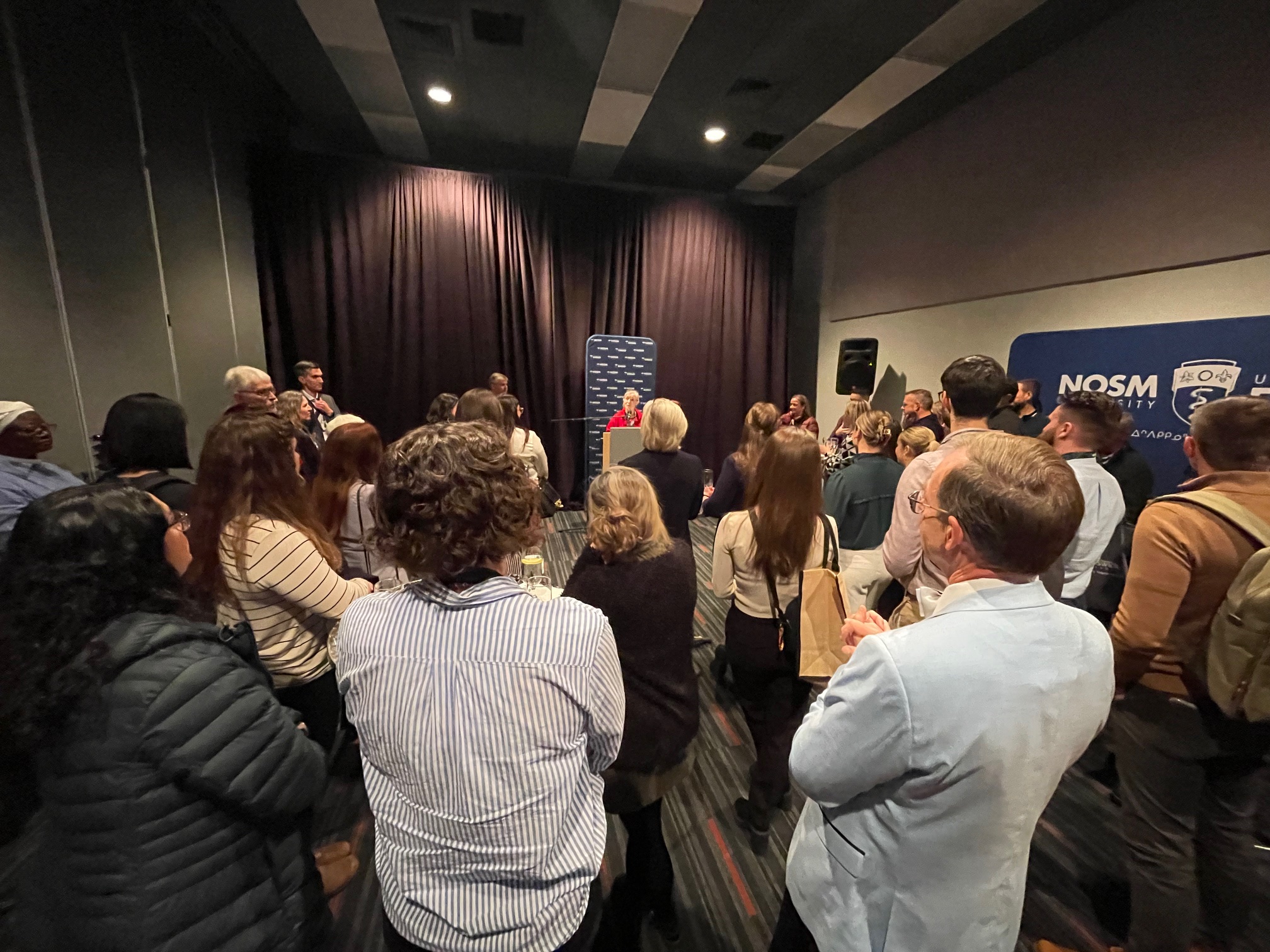
L’Université de l’EMNO était bien représentée au Forum sur médecine familiale du Collège des médecins de famille du Canada (CMFC) tenu à Montréal le mois dernier. Nous tenons à remercier toutes les personnes qui ont participé aux précieuses conversations sur l’avenir de la médecine familiale au Canada. L’équipe de direction du programme de médecine familiale de l’Université de l’EMNO a rencontré les dirigeants du CMFC pour discuter du projet Résultats de la formation et de la voie à suivre, compte tenu de la décision du CMFC d’interrompre la troisième année prévue de formation en médecine familiale. Le même jour, une réception célébrant la médecine familiale à l’Université de l’EMNO, généreusement commanditée par Gestion financière MD, a réuni plus de 70 membres du corps professoral, de la population étudiante et du personnel. Merci à Gestion financière MD!

Mini-sommet sur la médecine familiale
Les 4 et 5 novembre 2023, plusieurs chefs de file de la médecine familiale et responsables de groupes locaux d’éducation (GLE) se sont réunis pour explorer la faisabilité d’une structure départementale pour la médecine familiale à l’Université de l’EMNO. Ce sommet faisait suite à l’examen mené par le Dr Bob Bell de la Northern Ontario Academic Medicine Association, qui a déterminé que l’absence actuelle de structure pour la médecine familiale constituait un obstacle à l’expansion de nouveaux modèles et à notre réussite. Deux expertes-conseils, la Dre Ruth Wilson et Mme Mary Kay Whittaker, ont fait part de leurs idées après avoir étudié en détail la médecine familiale à l’Université de l’EMNO et les départements de médecine familiale dans l’ensemble du pays. La Dre Danielle Martin (directrice du département de médecine familiale et communautaire de la faculté de médecine Temerty de l’University of Toronto) et le Dr Preston Smith (doyen du collège de médecine de l’University of Saskatchewan) ont également fait part de leur expérience. Dirigées en collaboration par la Dre Sarah Newbery et plusieurs dirigeants universitaires de la médecine familiale à l’Université de l’EMNO, les discussions ont été constructives, et il a été entendu qu’il était nécessaire de poursuivre l’exploration. Les Drs Newbery, Anjali Oberai et Ed Hirvi (coprésidents de la section) se chargeront de la suite des travaux. Mme Kristy Côté, Ph.D., a été détachée au rectorat pour diriger ces travaux en tant que directrice administrative de la médecine familiale.
Réunion des codirecteurs de section, des responsables de GLE et d’administrateurs
Début novembre, il y a également eu une séance de réflexion des directeurs de section et de dirigeants de la Physician Clinical Teachers’ Association, ainsi qu’une réunion des responsables des GLE et des membres de l’administration. Ces réunions ont permis aux dirigeants du corps professoral clinicien de l’Université de l’EMNO de réfléchir à leurs rôles et contributions au paysage dynamique et changeant de l’Université. Il est inspirant de réfléchir au magnifique travail accompli dans nos sites en région sous l’excellent leadership du corps professoral clinicien. Il y a beaucoup de membres et de dirigeants du corps professoral, notre corps professoral clinicien fait un travail magnifique dans la formation en soins de santé et en recherche, et il y a beaucoup d’occasions de réimaginer comment continuer ce travail collectivement à l’Université de l’EMNO.
Réservez la date : Série de conférences de la rectrice
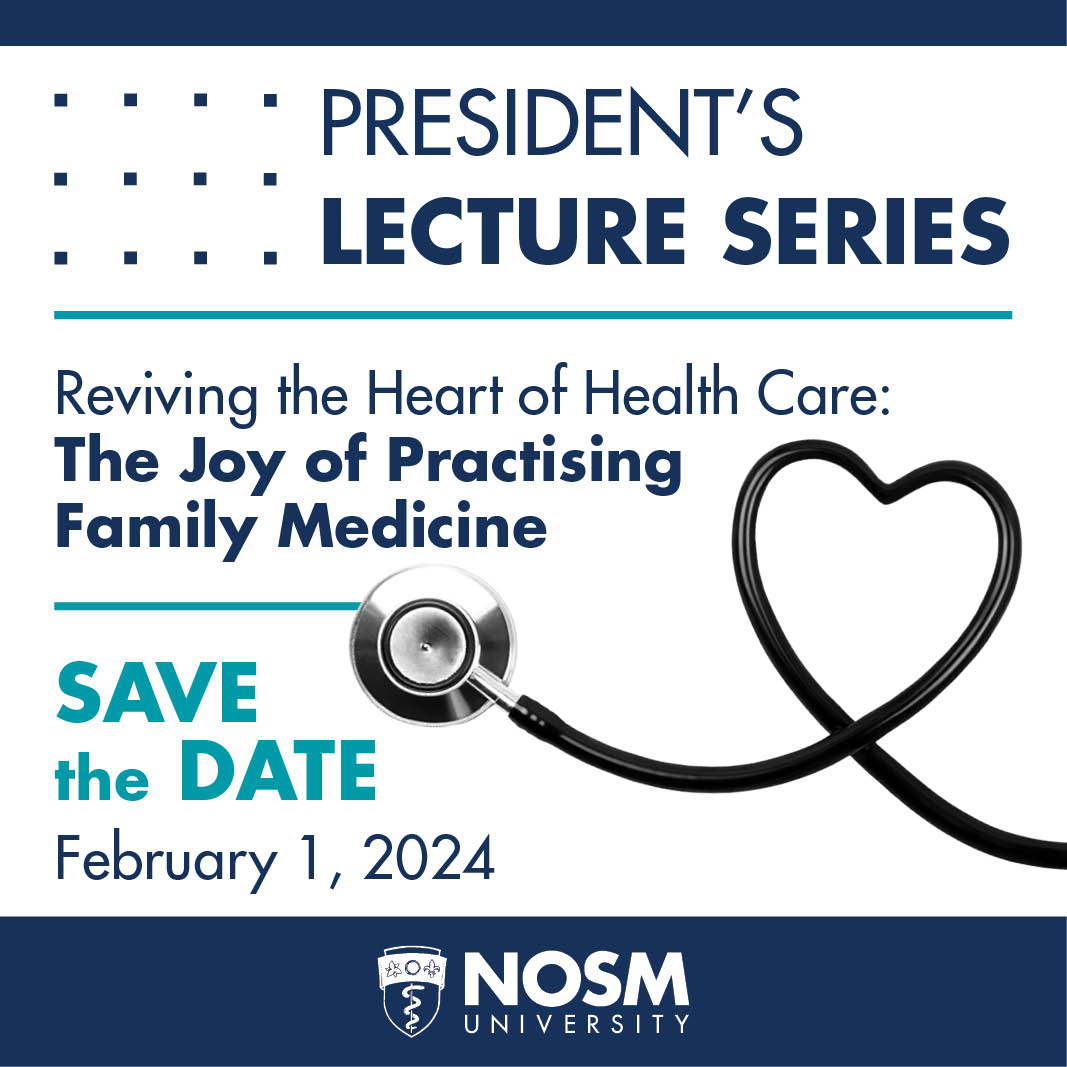
Reviving the Heart of Health Care: The Joy of Practising Family Medicine
Des experts indiqueront pourquoi il vaut la peine de choisir une carrière en médecine familiale, parleront de ses défis et exploreront pourquoi, maintenant plus que jamais, au Canada (et en Ontario en particulier), la population étudiante en médecine devrait se spécialiser en médecine familiale.
1er février 2024 | 18 h – 21 h
Participez en direct durant la période de questions sur WebEx ou regardez la diffusion en direct sur YouTube @NOSMtv!
Surveillez les détails à venir prochainement!
L’Université de l’EMNO nomme sa première responsable de la santé planétaire
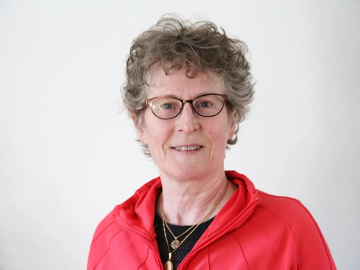
L’attention portée à la santé planétaire et à l’impact du changement climatique sur la santé humaine à l’échelle mondiale est une question cruciale pour les écoles de médecine, et en particulier pour l’Université de l’EMNO. Consciente de l’importance de cette question, l’Université de l’EMNO a mis en place sa première responsable de la santé planétaire, la Dre Elaine Blacklock.
Les nombreuses activités de plaidoyer et l’engagement de la Dre Blacklock à faire progresser les principes de santé planétaire font d’elle un atout inestimable pour notre institution. Chef de file en matière de climat dans le domaine de l’éducation, la Dre Blacklock préside le comité d’action sur le changement climatique de l’Université de l’EMNO et copréside le sous-comité du programme d’études sur la santé planétaire de l’Association des facultés de médecine du Canada. Elle est également chroniqueuse régulière sur le changement climatique et la santé, tant au niveau national que dans le nord de l’Ontario.
Au sein de l’Université de l’EMNO, sa riche expertise et son leadership visionnaire orienteront l’élaboration d’une stratégie globale en matière de santé planétaire. Outre l’intégration de la santé planétaire dans notre programme d’études, cette stratégie sera à l’origine de projets de recherche ambitieux et d’actions percutantes visant à réduire notre empreinte carbone et notre impact sur l’environnement.
Message de la Dre Elaine Blacklock, la première responsable de la santé planétaire de l’Université de l’EMNO,
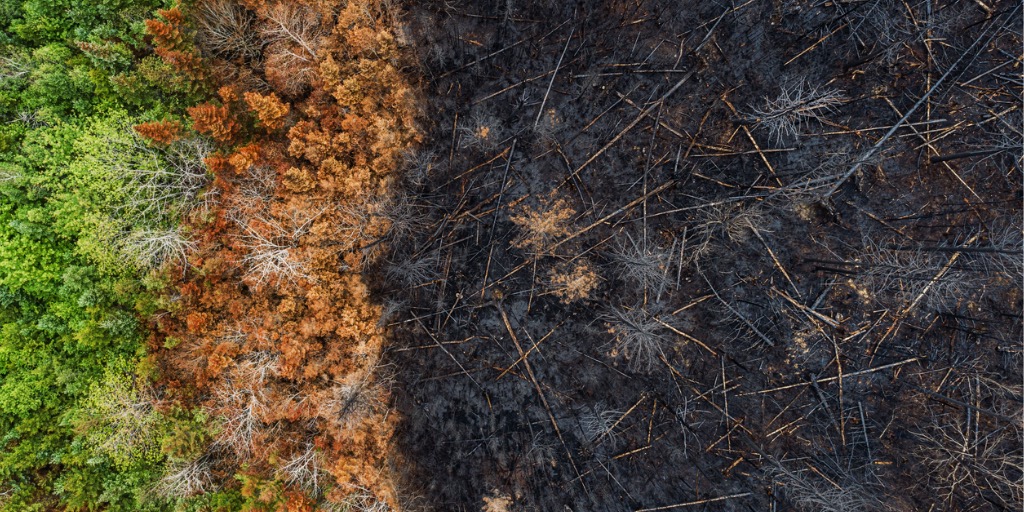
Récemment à Dubaï, de nombreux responsables du secteur de la santé ont participé à la Conférence des Nations Unies sur le changement climatique 2023 ou Conférence des parties de la CCNUCC, plus communément appelée COP28.
Alors que l’année la plus chaude jamais enregistrée touche à sa fin, je me sens de moins en moins à l’aise avec le statu quo de mon mode de vie et j’ai de plus en plus tendance à me poser la question suivante : sachant ce que je sais, comment devrais-je vivre ?
Cela fait environ 16 mois que j’ai pris la présidence du CACC, et cela vaut la peine de réfléchir à ce que notre équipe a accompli. Voici quelques exemples :
- La promesse de l’Université de l’EMNO concernant les voyages est en place.
- Le processus de divorce entre l’avancement des activités savantes et les voyages émettant beaucoup de carbone est bien avancé.
- L’Université de l’EMNO a signé l’engagement de l’AFMC en matière de santé planétaire, que nous pouvons mettre à profit pour agir.
- L’élaboration du programme d’études sur la santé planétaire est en bonne voie.
- Le poste de responsable de la stratégie en matière de santé planétaire a été affiché.
- L’Université de l’EMNO accueillera de nouveau l’Institut d’été pour les systèmes de santé durables.
- Nous avons rencontré Greenly, une organisation qui pourrait aider l’Université de l’EMNO à réduire son empreinte carbone/environnementale.
La prochaine réunion de l’ACCC est à 7 h le 25 janvier 2024. Si vous voulez y participer, communiquez avec Gina Kennedy à gkennedy@nosm.ca.
Dre Elaine Blacklock, responsable de la santé planétaire, Université de l’EMNO
Le Dr Owen Prowse est le nouveau vice-recteur, Partenariats cliniques et relations avec les hôpitaux, à l’Université de l’EMNO
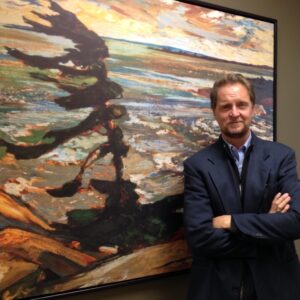
L’Université de l’EMNO a le plaisir d’annoncer que le Dr Owen Prowse a accepté d’assumer les fonctions de vice-recteur, Partenariats cliniques et relations avec les hôpitaux, à compter du 1er mars 2024.
Le Dr Prowse, urologue chevronné et respecté au Centre des sciences de la santé de Thunder Bay, assume depuis plus de dix ans des fonctions de chef de file à l’Université de l’EMNO.
Son nouveau poste, situé à Thunder Bay, s’aligne sur la structure grandissante de leadership de l’Université où les vice-rectorats remplaceront les décanats.
« J’envisage avec enthousiasme de consolider les relations avec les partenaires cliniques, les hôpitaux et les communautés, surtout dans le paysage postpandémique de la santé, a affirmé le Dr Prowse. Tout en apprenant à naviguer dans cette dynamique des soins de santé en évolution, nous pouvons nous efforcer d’améliorer les expériences des patients et de la population étudiante. »
Sa nomination fait suite au départ du Dr William McCready du poste de vice-doyen, Relations cliniques à l’Université de l’EMNO, le 29 février 2024. Néphrologue clinicien à la retraite qui a prodigué des soins spécialisés dans le nord-ouest de l’Ontario pendant presque 40 ans, le Dr McCready a joué un rôle fondamental important en veillant à ce que l’Université aille de l’avant. En qualité de premier doyen associé, Affaires professorales, il a supervisé la constitution du corps professoral, notamment le Bureau des affaires professorales, et assumé diverses fonctions, y compris au conseil d’administration de l’EMNO. Pour ces accomplissements et bien d’autres, à l’heure où il se lance dans de nouvelles aventures durant sa retraite, l’Université lui exprime toute sa gratitude.
Lisez davantage sur la nomination du Dr Prowse et la retraite du Dr McCready