Wikwemikong Tribal Police and NOSM University researchers are working together to develop a culturally-based, trauma-informed policing approach for Indigenous police services. This project has received $1,120,500 in funding from the Province of Ontario’s community safety and policing grant.
This initiative aims to improve community resilience related to the risk of addictions and human trafficking, train officers to better respond to trauma responses manifested by victims, as well as create trauma-informed, land-based Anishinaabe wellness support for police officers, first responders and victims involved with mental health, addictions and trafficking calls.
Staff Sgt. Scott Cooper, Acting Chief, Wikwemikong Tribal Police says that community police and health statistics indicate drug addiction—opioid use in particular—has dramatically increased during the COVID-19 pandemic. “The result is community concern for chronic drug-related and mental-health issues, family violence, loss of children into foster care, trafficking of women, crime, and vandalism.”
Staff Sgt. Cooper adds, “Historical consequences of colonial policies such as forced removal of children from their families and physical, sexual, mental, and spiritual abuse of generations of First Nations children in school systems has led to a heavy burden of intergenerational trauma in many First Nations communities. Wikwemikong is not an exception.”
Dr. Marion Maar, Professor at NOSM University, has a longstanding research relationship with Wikwemikong Unceded Territory. Her research collaborations with the community are focused on culturally-grounded, land-based healing approaches to mental health and addictions, trauma-informed responses to family violence and culturally congruent service evaluation.
Drawing on a network of NOSM University co-researchers, Dr. Maar is the lead partner for evaluation, research and curriculum development. She says she is thrilled to be part of this innovative interprofessional project that intersects medicine, social services and the justice sector. “Many community members have experienced high rates of adverse childhood experiences (ACEs), including those who are victims of crime and even police officers. There is a need to understand how Anishinaabe language, culture and the land can support healing and wellness in the justice sector.”
“Our collaborative research shows that traumatic childhood experiences can be predictors of mental health, addictions and conflict with the law,” says Dr. Maar. “Individuals with four or more adverse childhood experiences are 14 to 20 times more likely to be victims of violence, commit violence against another person and be incarcerated. We intend on collaborating with Anishinaabe language speakers and knowledge keepers to create culturally-based and trauma-informed responses to improve wellness of victims and officers.”
Staff Sgt. Cooper says Indigenous police officers must find a way to operate within the legacy of colonialism and the often negative connotation of police in First Nations communities. “There is an urgent need to develop trauma-informed models of policing that allows Indigenous officers to become grounded in the culture and wellness practices of their community and its values,” he explains.
“It is well documented that First Nations Police Officers often work in under resourced conditions” says Dr. Maar. “Officers policing rural and remote Indigenous communities are at a higher risk of physical victimization and unintentional injuries. Research shows that the work exerts an even greater psychological toll on rural and First Nations officers than on their municipal counterparts.”
“Support services are often solely offender focused,” says Staff Sgt. Cooper. “Healing is rarely focused on the officer, staff or victim. Our proposed training modules will focus on improving well-being for all involved stakeholders. This framework for trauma-informed policing has the potential to be adapted by other First Nations police services across the country.”
To support this project, Elycia Monaghan, a first-year medical student at NOSM University, has received a research award to undertake a literature review and assist with dialogues with Elders. Ms. Monaghan says her goal is to become Canada’s first Inuk psychiatrist and this project will help her gain a deeper understanding of mental health research. “As a future physician, I am excited to work with the Wikwemikong Tribal Police on trauma-informed and culturally-based services. My background is in social work and nursing, and my heart lies with seeing Indigenous mental health take a turn for the better. High rates of suicide, addictions, and trauma related to colonialism means that reconciliation needs to be focused on tangible solutions that improve lives.”
The Wikwemikong Tribal Police Service proudly serves and protects the people and property of the Wikwemikong Unceded Indian Reserve on Manitoulin Island. WTPS delivers community-based policing by developing cooperative relationships and by understanding the needs, customs, culture, and rights of our people.
NOSM University is Canada’s first independent medical university and one of the greatest education and physician workforce strategy success stories of Northern Ontario. More than just a medical university, it was purpose built to address the health needs of the region. While advocating for equitable access to care, the university contributes to the economic development of Northern Ontario. NOSM University relies on the commitment and expertise of the peoples of Northern Ontario to educate health-care professionals to practise in Indigenous, Francophone, rural, remote and underserved communities. With a focus on diversity, inclusion and advocacy, NOSM University is an award-winning, socially accountable organization renowned for its innovative model of distributed, community-engaged education and research. Through the lens of social accountability, NOSM University graduates, faculty, learners, researchers and staff lead health-system transformation in Northern Ontario.
For further information, please contact: communication@nosm.ca
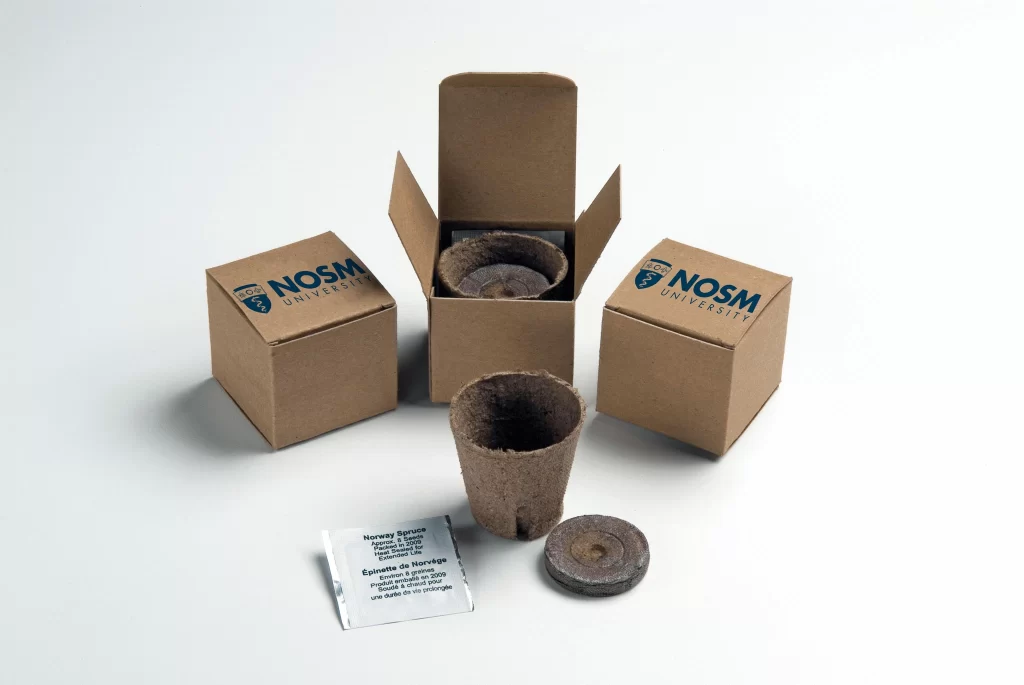 At NOSM University, we are taking immediate action. The NOSM University Advisory Committee on Climate Change (NACCC) is a motivated and thoughtful group of learners, staff, faculty, and community members focused on slashing our greenhouse gas emissions, reducing our environmental footprint, advising on curricular change and advocating for research in Northern Ontario related to climate change and its impact on health.