
Inaugural NOSM University Honorary Degrees to Celebrate Leaders Who Have Transformed Health Care in the North
Posted on May 13, 2026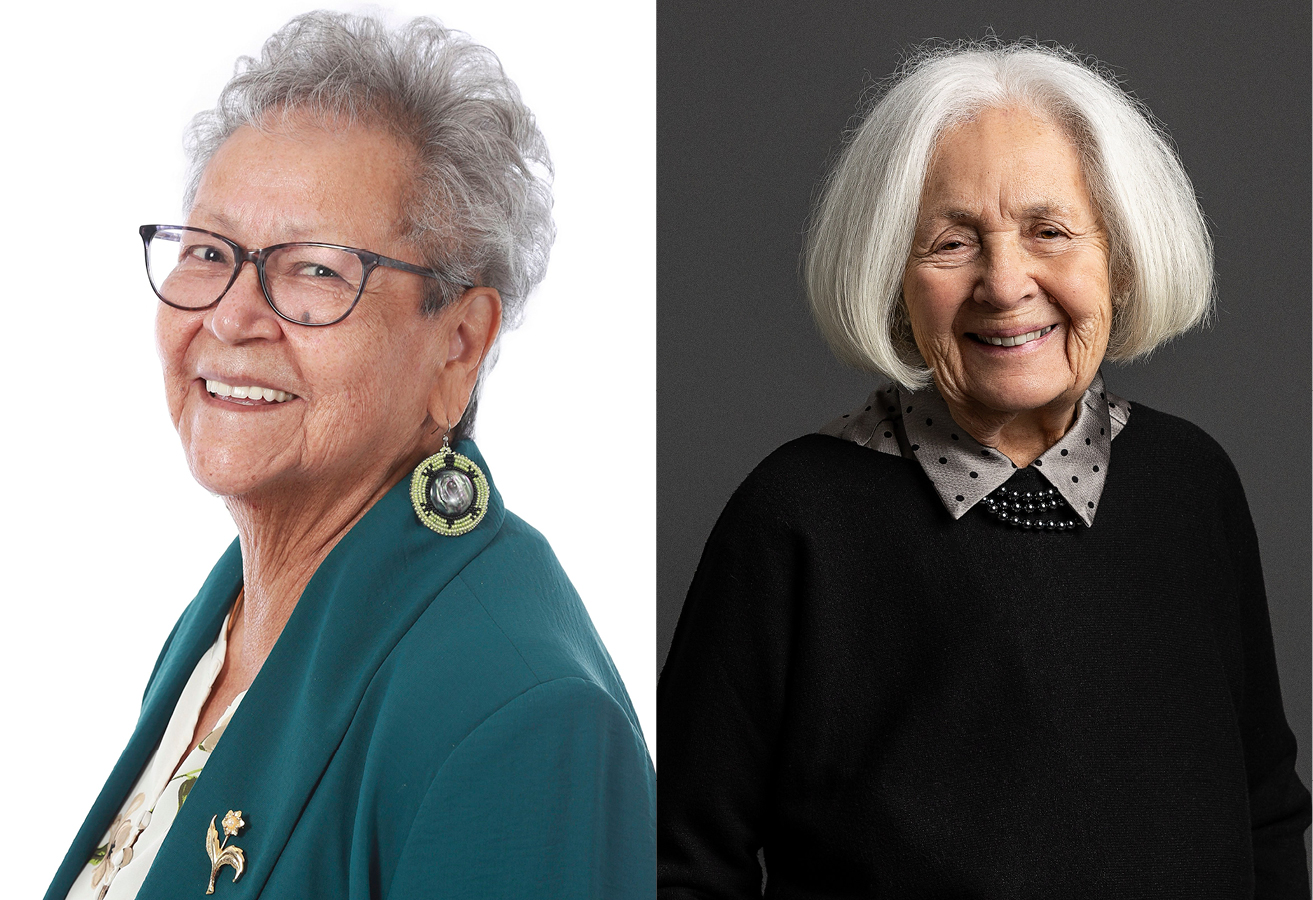
Awarding honorary degrees for the first time in its history, NOSM University is recognizing two individuals whose contributions have helped shape the University’s mission, strengthen its connection to community, and ultimately improve access to health care across the North.
The inaugural recipients, Elder Theresa Fiddler and Maureen Lacroix, have more than a century of health-care work and advocacy between them. Yet their impact is so much more than a sum of years: the results of their efforts have made profound and lasting changes to Northern Ontario health care.
“NOSM University exists because of the vision, courage, and commitment of leaders who believed that the North deserved a different model of medical education grounded in community and responsive to the needs of our region,” says Dr. Michael Green, NOSM University President, Vice-Chancellor, Dean, and CEO. “Elder Theresa Fiddler and Maureen Lacroix are being recognized for their work in building that foundation.”
At NOSM University’s Thunder Bay convocation, held on May 22, Fiddler will be recognized for her Indigenous health advocacy, which has led to systemic reforms and improved health equity. At the Sudbury convocation on May 29, Lacroix will be celebrated for her contributions to bringing cancer care to the North and to hospital and post-secondary governance.
“NOSM University is rooted in relationships—with communities, partners, and those who came before who helped define our path,” says Dr. Cindy Blackstock, Chancellor of NOSM University. “These honorary degrees recognize people who weave tradition, culture, and place together with medicine, strengthening holistic care for Northern Ontario and far beyond. The recipients inspire us all to bring our gifts forward in service of community holistic health.”
About the Honorary Degree Recipients
Elder Theresa Fiddler, Honorary Doctor of Medicine
Perhaps the most defining chapter of Fiddler’s life is her role in the 1988 Hunger Strike at the Sioux Lookout Indian Zone Hospital. Alongside her late husband, Chief Josias Fiddler, and other community leaders—Peter Goodman, Allan Meekis, Peter Fiddler, and Luke Mamakeesic—she supported and guided one of the most consequential acts of Indigenous resistance in Canadian health-care history. The hunger strikers demanded that the federal government confront appalling inequities in Northern health services. Their courage brought federal representatives to Sioux Lookout, saw the breakdown of the segregated Indian hospital system, and catalyzed systemic reform. From these events eventually emerged the Meno Ya Win Health Centre, a hospital that integrates Indigenous and Western healing traditions—and where Fiddler continues to serve as an Elder.
In 2006, Fiddler and her late husband hosted leaders from NOSM University in Sandy Lake First Nation, where they led sweat lodge and other ceremonial proceedings that grounded an emerging medical curriculum in Anishinabe teachings. This visit built the foundation for the Integrated Community Experience, a key curricular component unique to NOSM University that immerses first-year MD students in Indigenous community life. This experience, which promotes equitable care for Indigenous people from physicians who understand them, would not exist without the generosity, wisdom, and ceremony of the Fiddler family.
Fiddler’s ongoing contributions to health care and Indigenous knowledge are varied and extensive. As an Elder for Nishnawbe Aski Nation, she is a steadfast presence in several First Nations communities, including in times of crisis. She is an educator and advocate on the colonial history of medicine and an important figure in Indigenous studies, including working to challenge the myth of the “thrifty gene”—the idea that Indigenous peoples are genetically predisposed to type-II diabetes. She is an Elder for Nishnawbe Aski Nation’s Women’s Council, the Sioux Lookout First Nations Health Authority, the Chiefs of Ontario, and the Assembly of First Nations. The Teri Redsky Fiddler Tapes, a documentary series, transmits her life story and teachings.
An Honorary Degree for Fiddler recognizes her own immense contributions and the collective legacy of the Fiddler family.
Maureen Lacroix, Honorary Doctor of Medicine
Maureen Lacroix is a transformative leader whose life’s work and collaborative approach have permanently strengthened health care in Northern Ontario. A registered nurse and educator, she has dedicated decades to building partnerships, securing resources, and engaging community members in planning and establishing key institutions that serve the people of Sudbury and Northeastern Ontario.
Lacroix’s leadership and perseverance were instrumental in transforming the idea of a cancer center for the people of Northeastern Ontario into reality. She and other engaged community members recognized the need for specialized services closer to home, ensuring that Northerners could receive high quality care without leaving their communities.
A trailblazer in governance, Lacroix made history as Laurentian Hospital’s first ever female Board Chair, breaking longstanding barriers and setting a new standard for principled, service-oriented leadership. She later became the first woman to chair the Laurentian University Board, broadening her impact on education and the preparation of Northern Ontario’s future workforce. She eventually became the chair of the Northern Cancer Research Foundation where she continued to champion cancer care in the North for the North, including launching the Research Chair, Cancer Solutions, which resulted in a collaboration between Health Sciences North, Laurentian University, and the Cancer Centre.
Her steadfast commitment to Francophone health is enduringly reflected in the Maureen Lacroix Francophone Community Bursary, established in 2007. More broadly, her values—equity, access, compassion, and social accountability—are deeply embedded throughout NOSM University’s vision and mission and remain central to the education and training of Northern Ontario’s health care workforce. As a founding member of NOSM University’s Board of Directors, her advocacy helped shape an institution grounded in the belief that health care in the North must serve Northern communities first.
Lacroix’s legacy is defined by advancing equitable, community driven care across Sudbury and Northeastern Ontario, where she helped establish and shape the inventory of health care services, expand access to care, and improve outcomes for countless Northerners—all work that she accomplished as a volunteer.
This honour reflects a legacy defined not by titles or accolades, but by enduring impact.