

Rural Physicians Fill Gaps in Gender-Affirming Care
Posted on June 11, 2026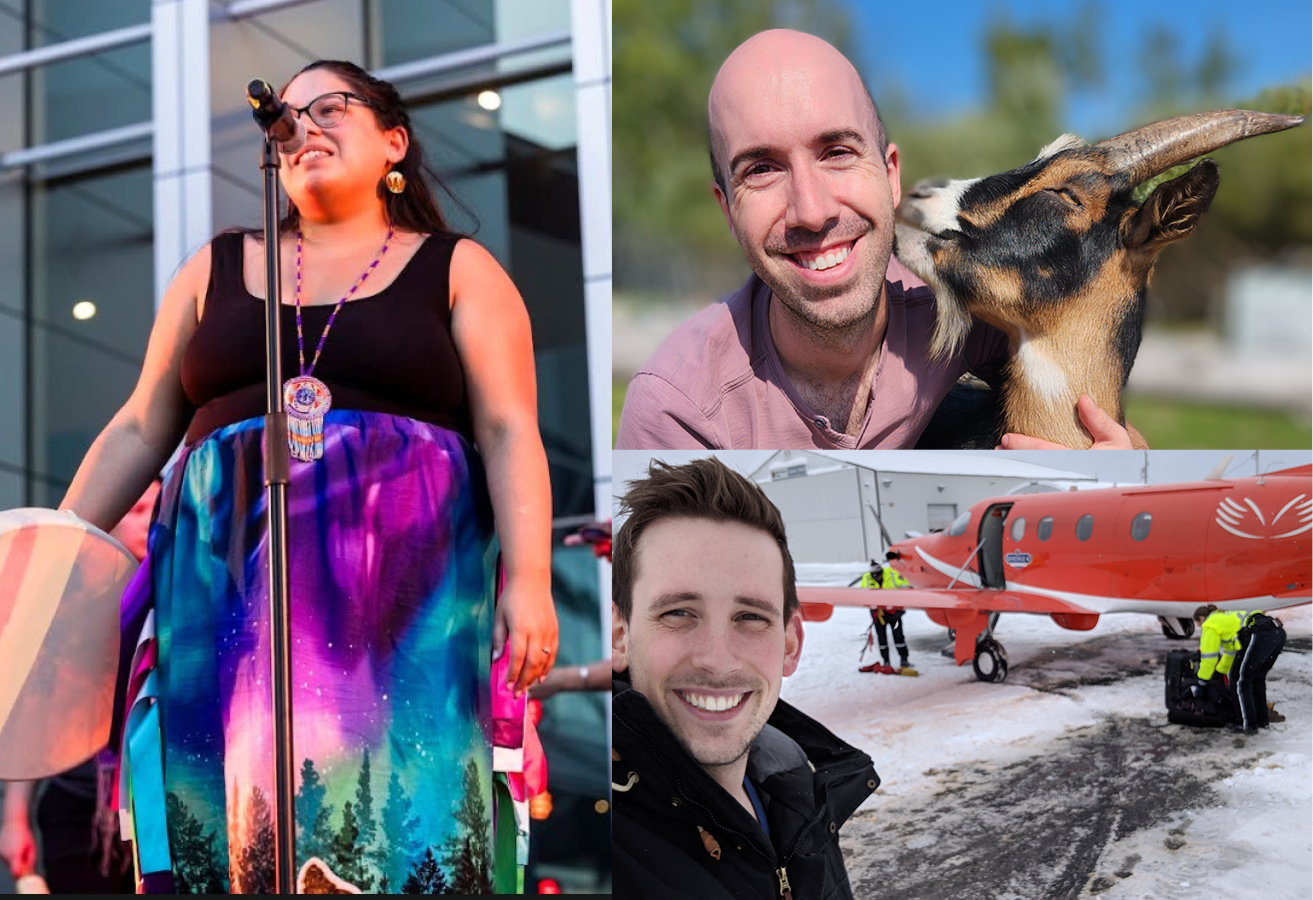
A trio of physicians are stepping up to fill major gaps in the health-care system and improve access to gender-affirming care in Northern Ontario. Gender-affirming care can be difficult to access anywhere in Canada, but in rural Northwestern Ontario, patients may travel long distances for even routine health checks.
Blazing a trail in health care for trans and gender-diverse patients are physicians Dr. Alexa Lesperance in Fort Frances, Dr. François Doiron in Dryden, and Dr. Justin Bell in Sioux Lookout—all NOSM University alumni and faculty, as well as members of the 2SLGBTQ+ community themselves.
“Gender-affirming care is lifesaving,” says Dr. Doiron, Assistant Professor. “The risk of depression and suicide in transgender individuals is exponentially higher than in other people, and access to gender-affirming care can be a matter of life or death. In rural communities, there are only a handful of us providing this care.”
Patients from all over Northwestern Ontario—from the Manitoba border to his hometown of Marathon—travel up to 16 hours to see Dr. Doiron in his Dryden clinic, and he visits Thunder Bay to see patients every three months. The Ministry of Health requires an in-person intake appointment before patients can receive care virtually—something Dr. Doiron has worked with the Ontario Medical Association to try to change.
Just over an hour away, in Sioux Lookout, Dr. Bell and a nurse run a regular clinic dedicated to trans patients. They serve patients of all ages and genders, most of whom are Indigenous, from across the Sioux Lookout region. Patients travel from dozens of First Nations communities and may need to take one or two flights to access health care. Phone and virtual appointments are also available.
“Trans people exist in all corners of Canada. Folks living in rural and remote communities often deal with isolation, a lack of queer community, and higher rates of transphobia. Living in rural or remote Northwestern Ontario means access to any kind of health care can be very challenging, and so I wanted to make things a little bit easier for trans and gender-diverse folks,” says Dr. Bell, Assistant Professor.
In addition to his clinical work, Dr. Bell strives to make a difference through research about trans patients’ experiences with primary care. During his studies in medical school, several of Dr. Bell’s friends came out as trans, sparking his interest in gender-affirming care.
“When my friends came out, I realized that options for accessing care were very limited for most people. Historically getting hormones and surgical referrals meant a lengthy and humiliating referral through the Centre for Addictions and Mental Health in Toronto. In 2016, the Government of Ontario decentralized transgender health care. It opened many doors for patients to access care through their family doctors,” Dr. Bell explains.
Gizhewaadiziwin Health Access Centre on Couchiching First Nation serves patients from First Nations communities in the Fort Frances, Rainy River, and Atikokan areas. While patients may take a shuttle van or drive up to an hour and a half for appointments, care is delivered in patients’ communities when possible. For example, nurses travel directly to reserve communities to provide services such as testosterone injections, which helps people receive ongoing gender-affirming care closer to home and within a culturally safe environment.
Dr. Lesperance, who delivers this care for the Health Access Centre, has always offered gender-affirming care as part of their medical practice, motivated by two strong women in their life.
“My auntie Ms. Mona Hardy-ba was a trans Two Spirit Elder who helped a lot of people in Thunder Bay. I was inspired by the support she offered people, but also by the lack of access she had growing up as a young woman,” says Dr. Lesperance, Clinical Lecturer. “As a medical student in Thunder Bay, I had the privilege of working with Dr. Annabella Zawada, founder of the Umbrella Clinic, which brought gender-affirming care to the city. Her practice of meeting people where they are fundamentally changed the doctor I became. I am grateful for both of these powerful women.”
For all three physicians, the importance of giving back to the queer community helped motivate their decision to deliver gender-affirming care.
“Pride Month is deeply meaningful to me both personally and professionally,” says Dr. Lesperance. “As a queer, non-binary Anishinaabe person, it is a time to celebrate identity, community, and the resilience of 2SLGBTQ+ people. Working in health care, Pride also reminds me of the importance of creating spaces where people feel safe, respected, and affirmed for who they are.”
“For me, Pride is not only about celebration, but also visibility and advocacy,” shares Dr. Lesperance. “It is important that Indigenous and 2SLGBTQ+ people see themselves reflected in health-care spaces and know they deserve care that honours their identities and their culture. Pride Month is a reminder of the strength of our communities and the importance of continuing to support people in accessing compassionate, culturally safe care.”
Want to learn more about gender-affirming health care? The NOSM University Health Sciences Library has a 2SLGBTQ+ Subject Guide, which includes a section on Transgender and Intersex Health.
Photo caption: Dr. Alexa Lesperance (left), Dr. François Doiron (top right), and Dr. Justin Bell (bottom right). Photos provided by Drs. Bell and Doiron.
Dr. Lesperance’s photo by Melody Charlie First Nations Photographer, provided courtesy of the Indigenous Physicians Association of Canada.