Galleries

Welcome to 2026: Turning Up the Volume on What Matters Most

Hello, Aanin, Boozhoo, Tanshi, Kwe Kwe, Bonjour,

Playing and listening to music has been a part of my life since a very early age. I will start this year’s blog with the idea of turning up the volume, not for noise, but for clarity.  In both classical music (I am a violinist) and in my preferred rock genre of heavy metal, raising the volume to fortissimo (or up past 11 to quote Spinal Tap), is used so the message can be felt and heard.  It has purpose—driving home a theme or message of importance.  The same is true of equity and social accountability—core values for NOSM University that are embedded in our enabling legislation and programs. When the stakes are high and voices risk being unheard, we must amplify our commitment and stand firmly behind what we believe in. As we welcome 2026, that belief continues to guide our work at NOSM University.

Over the past year, the University has continued to grow, not only in size, but in impact. We have expanded our education and training capacity, strengthened our research enterprise, and deepened partnerships across Northern Ontario. Each step forward reflects a clear focus on improving access to health care and advancing health equity for the communities we serve.

That momentum is reflected in the recent government announcement supporting the planning of five new Primary Care Teaching Clinics in Northern Ontario. These clinics represent an important step toward strengthening team-based primary care while training the next generation of providers in the communities where they are most needed. For NOSM University, this work aligns directly with our mission, embedding learners in community settings, reinforcing local health systems, and helping more people across the North connect to primary care closer to home.

Our progress is grounded in purpose. We educate and train physicians who understand the realities of Northern, rural, Indigenous, and Francophone communities and who are committed to serving them. Through our distributed, community-based model of medical education, learners and residents are embedded across the North, where they build relationships, develop skills, and deepen their responsibility to the people and places they serve.

Equity remains central to everything we do. Advancing fairness in health care and education is complex work, and meaningful change does not happen overnight. It requires persistence, courage, and sustained commitment. In 2026, we are turning up the volume on equity, ensuring inclusion, cultural safety, and social accountability are reflected in action, not intention.

Growth and expansion depend on collaboration. Our progress is made possible through strong partnerships with Indigenous communities, Francophone organizations, health system leaders, educators, and governments. Together, we are strengthening the Northern Ontario health workforce, supporting research that responds to regional priorities, and contributing to a more resilient and responsive health system.

As we look ahead, it is clear that momentum alone is not enough. Sustained impact requires the right conditions, clear priorities, and ongoing investment to ensure initiatives like Primary Care Teaching Clinics can move from planning to lasting change.

In 2026, we will continue to build on this momentum, guided by our values, informed by our communities, and driven by the belief that everyone deserves access to high-quality health care close to home.

Thank you to our learners, faculty, staff, alumni, partners, and supporters. Your dedication and collaboration make this work possible. Together, we will continue to amplify what matters most and move forward with purpose and conviction.

Here’s to a year of continued growth, expansion, and impact, and to turning up the volume together on equity in a steady, powerful, and lasting way.

Warm regards,

Dr. Michael Green
President, Vice-Chancellor, Dean, and CEO
NOSM University

If you have any feedback or comments, please reach out at president@nosm.ca and follow me on X (formerly Twitter) @DrMichaelGreen1.
Subscribe to Northern Routes


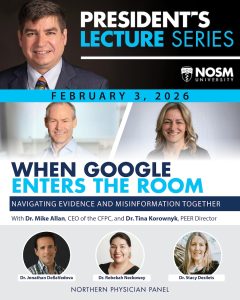
Save the Date: President’s Lecture Series 2026

Join NOSM University for When Google Enters the Room: Navigating Evidence and Misinformation Together.
In a world of instant search results, how do we support patients, learners, and colleagues in separating signal from noise? Speakers will explore practical ways to evaluate information, make evidence-informed decisions, and address misinformation with empathy.
🗓️ Tuesday, February 3, 2026
🕕 6:00 p.m. to 8:00 p.m. (ET)
📺 Live on YouTube: @NOSMtv
Open to all and free to attend.
Learn more about the event and our speakers at nosm.ca.

Dr. Gilles Arcand Centre for Health Equity at NOSM University brings local and global health equity partners together

“What if we were stronger together, as individuals, organizations, and proud Northern Ontarians.” These words from Dr. Erin Cameron, Professor and Director of Dr. Gilles Arcand Centre for Health Equity, rang true when the Centre brought local and global interest holders together for the bi-annual CREATE project meeting in November 2025. CREATE–short for Community-engaged ‍Research in Education, ‍Advocacy, and system ‍Transformation for advancing health ‍Equity–is a Social Sciences and Humanities Research Council (SSHRC) Partnership-funded project led by NOSM University researchers. It explores the ways in which partnered research networks can better serve local community health needs.

The project, now two years into its seven-year timeline, involves more than 50 international collaborators, including research, community, and organizational partners, with leadership from five institutional partners including Memorial University of Newfoundland, Sherbrooke University, The University of New Mexico, and the University of Central Queensland. The meeting, chaired by Dr. David Marsh, Vice President of Research and Graduate Studies, brings together project partners to celebrate successes, acknowledge relevant challenges, and identify key opportunities.

Partners celebrated both the depth and breadth of work happening across the project, with a combined 173 activities including research papers, workshops, and presentations. Partners emphasized that the CREATE project demonstrates how socially accountable research can be catalyzed through collaboration across research networks that are both locally embedded and globally focused. One output, a scoping review, was of particular interest as the findings identified the evolution of social accountability in the past decade and highlighted a significant research gap on socially accountable research.

“The findings also underscored that training and mentoring for researchers and communities strengthen socially accountable research, while revealing a knowledge gap in understanding the appropriate resources and structures needed to support it,” says Dr. Cameron.

This year’s interactive discussions focused on how the partners can collectively measure and capture the impact of sustained, valued research networks over time. Many ideas were presented and will help shape the next phase of the project. “Congratulations to all NOSM University members advancing socially accountable health equity research to support our rural, Northern, Indigenous and Francophone communities, and for putting us on the map,” says Dr. Cameron.

An Executive Committee Member at the CREATE gathering shared, “My aspiration is that social accountability becomes mainstream in health workforce education, health service delivery and health research. I see CREATE as an exciting major leap forward in that direction.”


About the Dr. Gilles Arcand Centre for Health Equity

The Centre is the first of its kind in Canada. It is a model for multidisciplinary, community-led, and community-prioritized health and public health research. The Centre is advancing social accountability research globally and locally by working and collaborating with diverse interest holders in the broad areas of health professional education, health system transformation, health human resources, social and population health. The Centre is home to 11 research networks that are focused on building capacity and providing tools for change. Learn more about the work of the Centre in the 2024 Annual Report.

President’s Lecture Series – When Google Enters the Room: Navigating Evidence and Misinformation Together

The NOSM University Student Council (NOSMUSC) invites you to join us for When Google Enters the Room: Navigating Evidence and Misinformation Together.

The session will explore the challenges of working with patients in an era of widespread misinformation, including how to address false information, incorporate evidence into clinical conversations, and share guidance in practical, everyday ways.

February 3, 2026
6:00 p.m. to 8:00 p.m.
Virtual: YouTube Live (@NOSMtv)
Free to attend.

Learning Objectives

  • Address false information with patients, colleagues, and learners
  • Incorporate evidence into clinical conversations
  • Provide practical guidance on evidence-informed patient care and medical education for patients, colleagues, and learners

Keynote Speakers:

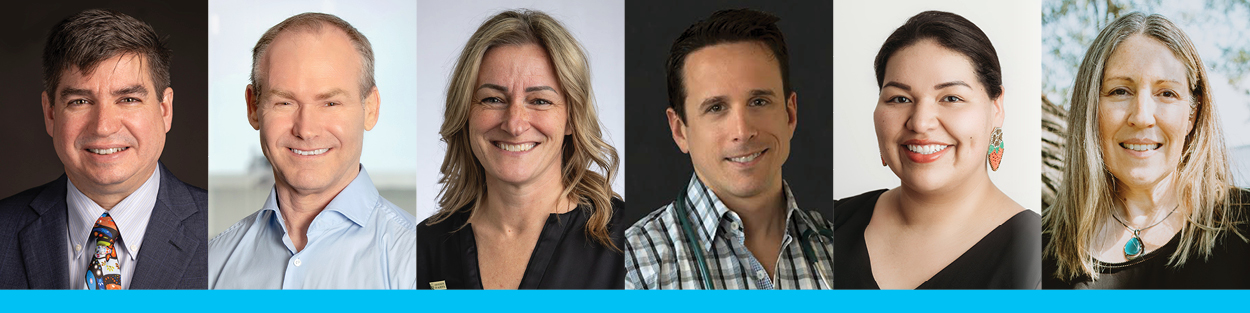
Dr. G. Michael (Mike) Allan is the chief executive officer of the College of Family Physicians of Canada and an adjunct professor at the University of Alberta. A family physician for more than 20 years, Dr. Allan is widely recognized for his leadership in evidence-informed medicine. He is a co-creator of PEER (Patients, Experience, Evidence, Research), the Simplified Guideline program, Tools for Practice, and the Best Science Medicine podcast, all of which support clinicians in applying high-quality evidence in everyday practice.

Dr. Tina Korownyk is a professor and chair of the Department of Family Medicine at the University of Alberta and serves as director of PEER. In 2023, she received the Reg L. Perkin Award as one of Canada’s Top Family Physicians. Dr. Korownyk is the author of more than 100 peer-reviewed research articles, with a strong focus on practical, clinically relevant questions in primary care.

Panellists:

Dr. Jonathan DellaVedova is a consulting pediatrician based in Sault Ste. Marie. He serves as chief of pediatrics and director of women’s and children’s health at Sault Area Hospital and is an associate professor at NOSM University. His work spans clinical care, health-system leadership, and medical education, with a focus on improving outcomes for children and families in Northern Ontario.

Dr. Becky Neckoway is a family physician who provides care to remote First Nations communities and is based in Thunder Bay. Her practice is grounded in a strong commitment to culturally safe, community-informed care, with an emphasis on building trust and improving access to health services in northern and remote settings.

Dr. Stacy Desilets is a rural generalist family physician practising in Temiskaming Shores. She is an associate professor at NOSM University and serves as the program evaluation and quality improvement lead for the Family Medicine Program. Dr. Desilets is also an active community contributor, supporting initiatives that strengthen rural health care and medical education.


This activity meets the certification criteria of the College of Family Physicians of Canada and has been certified by the Continuing Education and Professional Development Office at NOSM University for up to 2.0 Mainpro+® Certified Activity credits.