

Joy in Community: The Legacy of Dr. Remi Ogundimu
Posted on February 20, 2026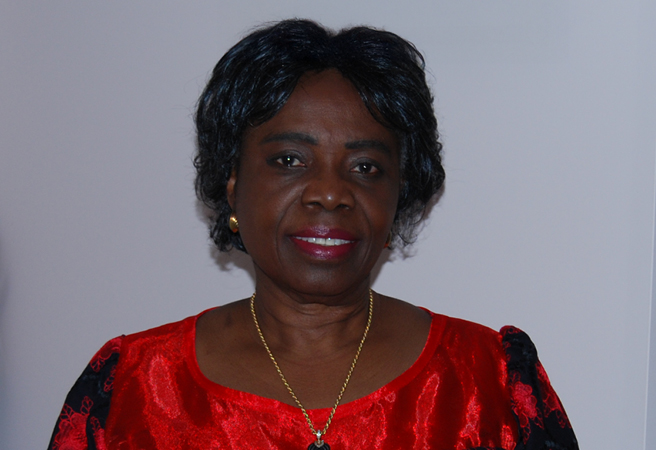
When Nigerian-Canadian pediatrician Dr. A. Oluremi Odulana-Ogundimu (known as Dr. Remi Ogundimu) set out to make Sudbury a home for her family in the 1980s, very few Black people lived there, she says.
“When you are in a new place, you look around. You find that you can count people who look like you on your fingers. The other Black people are not from where you are from. You say: How do we connect together? How do we share things? If I need help, who do I go to? Can I go to people who look like me? You have a chance to connect with people and to make things better for your children.”
Dr. Ogundimu, along with her husband, neurosurgeon Dr. Fadegbola Ogundimu, and two other Black physicians, aimed to build community by creating the Afro-Heritage Association of Sudbury (AHA), which they founded in 2005. More than two decades on, AHA continues to thrive—and so does Sudbury’s Black community, which now also boasts associations for Sudburians with Ghanaian, Kenyan, Cameroonian, and Nigerian heritage, as well as a host of African restaurants and cultural events.
“The number of Black people in Sudbury has continued to grow,” Dr. Ogundimu says. “For those of us who have been here a long time, the changes to this community are so elating.”
In addition to her work with AHA, where she recently retired from leadership on the Board after decades of service, Dr. Ogundimu has served on the Board of the Sudbury Multicultural and Folk Arts Association, including as President and Vice-President. She was the first woman president of the Canadian Association of Nigerian Physicians and Surgeons and was an Assistant Professor at NOSM University from 2005-2014.
Dr. Ogundimu has been recognized for her community leadership with the King Charles III Coronation Medal, an Ontario Volunteer Service Award, and Canada 150 Volunteer Award; was celebrated as Woman of the Month in 2018 by the Business and Professional Women’s Association of Greater Sudbury; was awarded an Honorary Doctorate of Sacred Letters from Huntington University; and was one of the first 100 Accomplished Black Canadian Women recognized at the inaugural awards ceremony. Yet she remains modest, warm, and approachable, driven by a deep desire to find joy in community and to improve life for others, including youth.
“If a Black child walks into a place and they don’t see other Black people, they will wonder if they belong. When they do see people who look like them, they feel comfortable, confident, and ready to move forward. We need to be more visible in the community. I want other people of my colour to see that success is possible and that they belong here. If we do this together, we will build a stronger community where everyone supports one another and can reach out for help,” she says.
When the Northern Ontario School of Medicine opened its doors, AHA was one of the first organizations to establish a bursary supporting medical students. The Afro-Heritage Association Bursary has provided financial aid to NOSM University students since its creation in 2006.
Recognizing that there were few scholarships devoted to Black youth, in 2007 Dr. Ogundimu and AHA, alongside Sudbury lawyer Jack Braithwaite, worked to establish a second fund—the Michaëlle Jean Sudbury Afro-Canadian Heritage Fund, which supports Black youth pursuing post-secondary education at any institution. Two years ago, the bursary was renamed the Dr. Oluremi Ogundimu Sudbury Afro-Canadian Heritage Association Fund—much to Dr. Ogundimu’s amazement.
“I was at the grocery store when Dr. Chantae [Bekai, then AHA President] phoned asking to drop by. When I got home, she and other AHA members presented me with a plaque and they said, ‘We are naming this bursary after you.’ It was a huge surprise. I didn’t suspect anything,” Dr. Ogundimu recalls.
“We want the students to know that we are ready to support them and help them to achieve,” she adds, about both bursaries. AHA continues to contribute to student bursaries.
This February, Canada marks 30 years of Black History Month. Dr. Ogundimu praises the efforts of the first African-Canadian woman to be elected to the House of Commons—and her dear friend—the Honourable Jean Augustine, who introduced a motion into the House of Commons to recognize the first Black History Month. The motion passed unanimously in December 1995. (Augustine is also the founder of 100 Accomplished Black Canadian Women, which recognized Dr. Ogundimu at their inaugural ceremony in 2016.)
When asked what Black History Month means to her, Dr. Ogundimu recalls a field trip she took with fellow university students in Nigeria to see where slaves had been loaded onto ships. “You’ve lived with that history and people are now saying it’s over,” she says. “But we can’t dismiss history. We need to understand the history because we don’t want the bad history to repeat itself. You want to move forward. Together, we can make the world a healthy, peaceful, and joyous place to live.”